Why Cold Outbound Is Broken (And Getting Worse)
The traditional outbound playbook looked like this: build a list of your ideal customers, blast them with emails, call anyone who opened, follow up relentlessly, repeat. For a long time, it kind of worked.
That era is over.
The average B2B cold email response rate in 2025 sits at just 3–4%. Inbox spam filters are more aggressive. Decision-makers are bombarded with AI-generated outreach that all sounds the same. And buyers — particularly at established UK businesses — have simply tuned it out.
The deeper problem is structural. Cold outbound targets people based on who they are (their job title, company size, industry) rather than what they are doing right now. You are interrupting people who have no context, no need, and no interest at this particular moment. Even if your solution is perfect for them, you are reaching out on your timeline, not theirs.
Meanwhile, those same prospects will buy something eventually. They are researching solutions, comparing competitors, asking colleagues for recommendations. They are leaving a trail of signals that indicate genuine purchase intent — and until recently, most businesses had no way to see those signals.
AI has changed that.
What Are Buying Intent Signals?
Every time a potential customer takes a step toward buying something, they leave a digital footprint. These footprints — intent signals — are the raw material of modern AI-powered sales.
Intent signals fall into a few categories, ranging from mildly interesting to call them right now:
First-Party Intent Signals (Your Own Data)
- Visiting your pricing page (high intent)
- Downloading a whitepaper or guide (medium intent)
- Opening multiple emails in a sequence (medium intent)
- Returning to your website multiple times in a short window (high intent)
- Watching a demo video (very high intent)
Most businesses collect this data but do not act on it systematically. Your CRM might show a contact opened an email three times — but without AI, nobody is joining those dots in real time.
Second-Party Intent Signals (Social Platforms)
- LinkedIn activity — what content prospects are engaging with, what they are posting about
- Job postings that signal a company is scaling in a relevant area (a business hiring a Sales Operations Manager is probably evaluating CRM tools)
- Reviews left on competitor products on G2 or Capterra
Third-Party Intent Signals (The Internet at Large)
These come from external data aggregators who track browsing behaviour across thousands of websites. Bombora, for example, monitors over 5,000 B2B websites and tracks which topics companies are researching. If a business is suddenly consuming a lot of content about sales automation or CRM migration, Bombora flags that company as having active intent around those topics — before they have ever visited your site.
Trigger Events
- A company raises a funding round — they now have budget
- A new Sales Director or CRO joins — new leaders review and replace tools
- A business announces expansion into new markets — operational need emerges
- An acquisition or merger — integration projects require new tooling
Here is the thing about all of these signals: they are already happening. Your ideal customers are leaving breadcrumbs every single day. The question is whether you are seeing them — and whether you are acting fast enough when you do.
How AI Turns Signals Into Booked Meetings
Seeing intent signals and acting on them at scale requires AI. Without it, you would need someone to manually monitor LinkedIn, parse job postings, check Bombora reports, and cross-reference your CRM for every prospect, every day. That is not a job — it is three jobs.
AI handles this in real time. Here is what the workflow looks like in practice:
Step 1: Signal capture. AI tools continuously monitor data sources — your website analytics, LinkedIn, third-party intent platforms, news feeds, and job boards — and assign intent scores to prospects based on their activity.
Step 2: Prioritisation. Not all signals are equal. AI ranks your prospect list dynamically. A contact who visited your pricing page twice, works at a company that just hired a new Sales Director, and whose firm is trending on Bombora for sales automation gets pushed to the top of the queue.
Step 3: Personalised outreach — automatically. Instead of a generic cold email, the AI crafts outreach that references the specific signals. The message feels relevant because it is relevant.
Step 4: Timing the touch. AI does not just personalise — it times outreach to the optimal moment. Reaching out within hours of a high-intent signal dramatically outperforms reaching out days later.
Step 5: Automated follow-up. The system tracks responses and non-responses, adjusts the sequence, and keeps nurturing until a meeting is booked — without your team needing to manually manage the process.
The result: your sales team stops spending time on people who have no interest right now, and focuses almost entirely on prospects who are actively in buying mode.
Valley: The Tool Changing LinkedIn Outbound
Of all the intent-based prospecting tools available right now, Valley is one of the most interesting — and one of the least talked about outside of growth-focused sales teams.
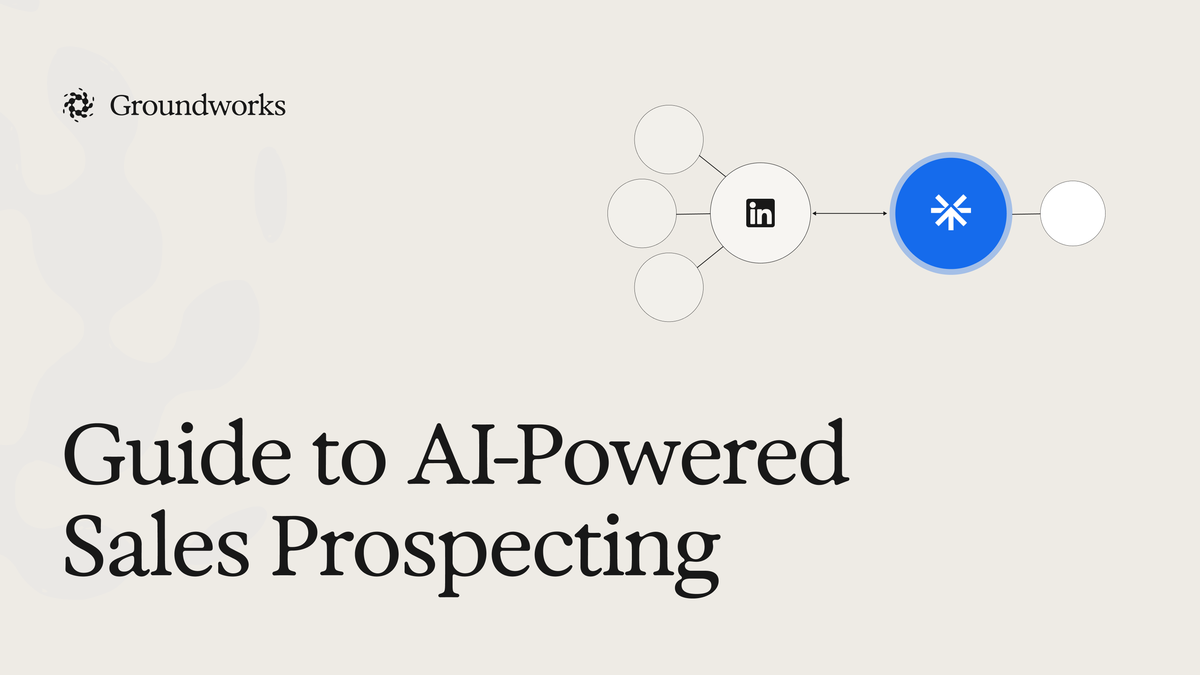
Valley is an AI-powered LinkedIn automation platform built specifically for warm outbound. The premise is simple but powerful: LinkedIn is full of intent signals, and most businesses completely ignore them.
Signal detection on LinkedIn. Valley monitors LinkedIn for signals that indicate purchase intent — prospects engaging with content about problems your solution solves, commenting on competitor posts, following relevant industry accounts, or posting about challenges your business addresses.
Automated research and personalisation. When Valley identifies a high-intent prospect, it automatically researches their profile, their company, their recent activity, and their likely pain points. It then crafts a personalised connection request and message sequence that references what it found — making every outreach feel bespoke.
Warm outbound at scale. Valley is not sending generic bulk messages. It is reaching out to people based on signals that they are actually receptive. The difference in response rates between cold spray-and-pray LinkedIn messages and intent-signal-triggered outreach is significant.
Meeting booking automation. Valley manages the entire conversation thread, handles follow-ups, and can book meetings directly into your calendar — without a human touching it.
For a UK business with a small sales team — or a founder who is the sales team — Valley gives you the output of a senior SDR working around the clock, without the headcount cost.
The Full Intent Stack: Tools Worth Knowing
Valley is excellent for LinkedIn-based intent, but a robust strategy uses multiple layers. Here is a quick overview of the broader toolkit:
Bombora (Third-Party Intent). The gold standard for third-party B2B intent data. Bombora aggregates browsing behaviour from over 5,000 B2B websites to identify companies surging on specific topics. If your ideal customer is researching HR software or operations automation, Bombora will tell you who is doing it — before they have ever visited your site. Integrates with HubSpot, Salesforce, and most major CRMs.
Apollo.io (Combined Prospecting and Intent). Apollo combines a massive B2B contact database with intent signals, email sequencing, and CRM integration. You can build a list, see intent data, and launch a personalised sequence all from one platform. Accessible pricing makes it realistic for businesses without enterprise budgets.
Unify (Real-Time Intent and Outreach). Unify focuses on real-time buyer signals — tracking website visitors, job changes, and product usage signals, then enabling hyper-personalised outreach the moment intent spikes. Particularly strong at de-anonymising website traffic, identifying which companies are visiting your site even if no one fills in a form.
HubSpot with AI (First-Party Intent, Accessible). If you are already on HubSpot, its newer AI features include predictive lead scoring and deal intelligence — surfacing contacts most likely to convert based on behavioural signals in your own database. A logical starting point if you are not ready to invest in a full intent stack.
What This Looks Like in Practice
Imagine you run a UK-based business that sells operations software to manufacturing companies with 50 to 200 employees.
Without intent-based prospecting: Your SDR has a list of 500 target companies. They work through it systematically — cold email, LinkedIn connection request, follow-up call. Response rate: 3 to 5 percent. Most rejections are from people who simply have no need right now.
With intent-based prospecting:
- Bombora flags 12 companies in your target market who are surging on topics like production scheduling software and manufacturing ERP. These companies are actively researching — and you did not know they existed.
- Valley detects that the Operations Director at one of your top target accounts has been engaging with LinkedIn content about production bottlenecks and followed two competitors this week.
- Unify shows that someone from another target account has visited your pricing page three times in the past week from a company IP — but has not filled in a form.
- Apollo flags that a company you have been cold emailing for months just hired a new Head of Operations — a classic trigger event.
Your AI tools surface all of these signals in a single dashboard, ranked by intent score. Valley drafts personalised LinkedIn outreach referencing the Operations Director's recent activity. A triggered email sequence goes out to the pricing page visitor with a relevant case study. Your SDR calls the company with the new Operations hire — armed with context.
Response rates on intent-triggered outreach routinely run three to five times higher than cold outbound. You are not sending more. You are sending smarter.
How to Get Started This Week
You do not need to overhaul your entire sales process overnight. Here is a practical starting point:
Week 1: Get visibility on your existing intent. Set up website visitor identification — tools like Unify or Leadfeeder — to start seeing which companies are already visiting your site. This is first-party intent you are currently ignoring.
Week 2: Add LinkedIn intent tracking. Trial Valley and connect it to your LinkedIn account. Start with your top 50 target accounts and let it monitor their activity for a week before you send anything. Get a feel for the signals before acting on them.
Week 3: Layer in third-party intent. If you have HubSpot or Salesforce, explore Bombora's integration. Even a one-month trial will show you how many of your target accounts are in active research mode right now.
Week 4: Build your first intent-triggered sequence. Create one email sequence specifically designed for high-intent prospects — not a generic nurture, but a targeted message that acknowledges they are likely evaluating solutions and offers something genuinely useful.
The mindset shift: stop thinking about outbound as a volume game. Start thinking about it as a timing game. The goal is not to reach everyone — it is to reach the right people at the exact moment they are ready to listen.
The Bottom Line
Cold outbound is not dead — but cold outbound that ignores intent is rapidly becoming obsolete. The businesses winning in B2B sales right now have figured out something simple but powerful: if you know when someone is in buying mode, you do not need to interrupt hundreds of people who are not.
AI intent tools like Valley, Bombora, and Unify have made this approach accessible to businesses that are not enterprise-scale. You do not need a team of data analysts or a six-figure technology budget. You need the right tools, pointed at the right signals, with the discipline to act quickly when those signals fire.
For UK businesses competing against better-resourced competitors, this is a genuine leveller. Your prospects are already showing you when they are ready to buy. The question is: are you watching?
If you would like to explore how intent-based prospecting could work for your business, get in touch with our team.